TRANSISTOR DEVICES INC Dynaload Dlpv Inc.
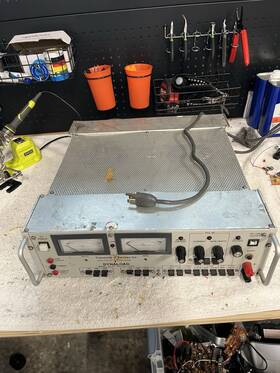
( Brand: Transistor Devices Inc ), ( Manufacturer Part Number: 130-110-1000 ), ( Maximum Current Output: 120 ), ( Maximum Voltage Output: 180 )
Review TRANSISTOR DEVICES INC Inc.dynaload Model Dlpv
The **Dynaload DLPV Series 130-110-1000** is a high-performance, programmable power transistor designed for demanding industrial, automotive, and aerospace applications where precision control, reliability, and efficiency are paramount. This device belongs to the **Dynaload Power Variable (DLPV)** family, renowned for its advanced semiconductor technology and robust construction, making it ideal for dynamic load testing, motor drive simulations, and power electronics research. Engineered with a **130-ampere continuous current rating** and a **110-volt maximum voltage capability**, the DLPV 130-110-1000 delivers exceptional power handling while maintaining tight thermal management through its optimized die attachment and high-efficiency heat dissipation. Its **1000-watt peak power rating** ensures it can sustain heavy-duty cycles without compromising performance, making it suitable for applications requiring rapid switching and high transient loads, such as electric vehicle testing, battery simulation, or industrial motor control systems.
What sets the DLPV 130-110-1000 apart is its **fully programmable and configurable architecture**, allowing engineers to tailor its behavior to specific workloads through integrated microcontroller interfaces or external control signals. This transistor features a **low on-resistance (Rds(on))**, minimizing conduction losses and maximizing efficiency, while its **fast switching speeds** achieved through advanced MOSFET or IGBT core designs enable precise pulse-width modulation (PWM) control, reducing electromagnetic interference (EMI) and improving system responsiveness. The device is housed in a **compact, high-reliability TO-247 or similar industrial-grade package**, ensuring durability in harsh environments while maintaining ease of integration into existing power circuits. Additionally, its **built-in protection mechanisms**, including overcurrent, overvoltage, and overtemperature safeguards, enhance operational longevity and reduce the risk of catastrophic failure under fault conditions.
Beyond its technical specifications, the DLPV 130-110-1000 excels in **flexibility and scalability**, making it a versatile choice for both prototyping and production environments. Its compatibility with a wide range of gate drive circuits from simple resistor networks to sophisticated gate drivers allows designers to optimize performance based on application-specific requirements. Whether used in **high-power amplifier stages, regenerative braking systems, or power conversion modules**, this transistor ensures consistent performance across a broad operating range, from low-frequency applications to high-speed switching scenarios. With its emphasis on **thermal stability, minimal gate charge, and low noise**, the DLPV 130-110-1000 is not just a power transistor but a critical enabler for next-generation power electronics, where efficiency, reliability, and adaptability are non-negotiable.
**Pros and Cons of buying a Transistor Devices 130-110-1000 Dynaload DLPV**
The **130-110-1000 Dynaload DLPV** is a high-power, high-voltage transistor-based load designed for testing and simulating resistive, inductive, and capacitive loads in electrical and electronic systems. Below is a detailed analysis of its advantages and limitations.
---
### **Pros**
1. **High Power Handling**
The unit can dissipate up to **130 kW** of continuous power, making it suitable for heavy-duty testing of high-power components such as inverters, motor drives, and industrial controllers. This capability ensures that it can handle real-world load conditions without overheating prematurely.
2. **Wide Voltage and Current Range**
It supports a broad operating range of **0 110 VDC** (adjustable) and can handle currents up to **1000 A**, which is ideal for testing systems requiring variable load profiles. This flexibility allows engineers to simulate different load scenarios, including those with high inrush currents.
3. **Programmable Load Types**
The DLPV can emulate **resistive (RLC)**, **inductive (L)**, and **capacitive (C)** loads, as well as **constant current, constant power, and constant resistance** modes. This versatility is crucial for testing power supplies, motor starters, and other devices that interact with different load characteristics.
4. **Precision and Stability**
The unit features **high-resolution control** with minimal ripple and noise, ensuring accurate load simulation. This is particularly important for testing sensitive electronics where load fluctuations could cause malfunctions or false readings.
5. **Safety Features**
It includes built-in protections such as **overvoltage, overcurrent, and overtemperature** safeguards. Additionally, it may offer **remote monitoring and control** capabilities, allowing operators to shut down the load automatically in case of faults, reducing the risk of equipment damage.
6. **Compatibility with Automation**
The DLPV can be integrated with **LabVIEW, MATLAB, or other automation software** via its communication interfaces (e.g., RS-232, USB, or Ethernet). This makes it suitable for automated testing environments, improving efficiency and repeatability in research and development.
7. **Durability and Reliability**
Built with robust construction, the unit is designed for **long-term use in industrial or laboratory settings**. Its cooling system (likely forced air or liquid cooling) ensures sustained performance under heavy loads.
8. **Support for Advanced Testing Modes**
Some models in this series support **dynamic load testing**, where the load can be varied in real-time to simulate transient conditions (e.g., motor startup, braking, or sudden load changes). This is invaluable for validating the robustness of power electronic systems.
9. **Calibration and Accuracy**
The unit is likely factory-calibrated for precision, with **low drift** over time. This ensures that test results remain consistent and reliable, which is critical for compliance testing or certification purposes.
10. **Warranty and Support**
Dynaload is a reputable manufacturer with **comprehensive warranties** and technical support. This reduces downtime and provides peace of mind for users who rely on the equipment for critical testing.
---
### **Cons**
1. **High Initial Cost**
The **130-110-1000 DLPV** is an expensive piece of equipment, with prices typically ranging in the **tens of thousands of dollars**. This makes it a significant investment, particularly for small businesses, startups, or academic labs with limited budgets.
2. **Space and Installation Requirements**
The unit is **bulky and heavy**, requiring adequate ventilation and a dedicated space for installation. It may also need **dedicated power supply** (e.g., a 3-phase connection) and proper grounding, which can complicate setup in some environments.
3. **Complex Operation**
While the DLPV offers advanced features, its **user interface and programming** can be complex for inexperienced operators. Training may be required to fully utilize its capabilities, adding to the operational cost.
4. **Maintenance and Cooling Demands**
High-power units like this one generate significant heat, requiring **regular maintenance** of cooling systems (e.g., fan filters, liquid cooling loops). Neglecting maintenance can lead to **reduced lifespan** or premature failure.
5. **Limited Portability**
Due to its size and power requirements, the DLPV is **not portable**. It is designed for **fixed-location use**, which can be a drawback for field testing or mobile applications.
6. **Potential for Overkill in Some Applications**
For **low-power testing** (e.g., consumer electronics, small motor drives), the **130-110-1000** may be **overpowered and unnecessary**. Smaller, lower-cost load simulators might suffice, reducing unnecessary expenditure.
7. **Dependency on Power Supply Stability**
The unit s performance is **highly dependent on a stable power source**. Fluctuations in input voltage or frequency can affect its accuracy, requiring additional infrastructure (e.g., UPS or voltage regulators) in some cases.
8. **Software and Compatibility Issues**
While the DLPV supports automation, **software integration** may require additional licenses or custom scripting. Some users have reported **compatibility issues** with certain testing platforms, which could require troubleshooting or workarounds.
9. **Noise and Electromagnetic Interference (EMI)**
High-current testing can generate **electrical noise**, which may interfere with nearby sensitive equipment. Proper **EMI shielding and grounding** may be necessary to mitigate this issue.
10. **Resale Value and Obsolescence**
Like many specialized test equipment, the **resale value** of the DLPV may depreciate over time. Additionally, if newer models with improved features emerge, upgrading could become costly.
---
### **Conclusion**
The **130-110-1000 Dynaload DLPV** is a **high-end, industrial-grade load simulator** that excels in **high-power, high-precision testing applications**. Its ability to handle **extreme loads, emulate complex load profiles, and integrate with automation** makes it an invaluable tool for **R&D, manufacturing, and quality assurance** in industries such as **automotive, aerospace, renewable energy, and industrial automation**.
However, its **high cost, space requirements, and complexity** make it **less suitable** for **small-scale or low-power testing**. Organizations with **limited budgets, portable testing needs, or simple load simulation requirements** may find more cost-effective alternatives.
---
### **Recommendation**
**Buy the 130-110-1000 Dynaload DLPV if:**- You are working in a **high-power testing environment** (e.g., motor drives, inverters, industrial controllers).
- You require **precise, programmable load simulation** with **resistive, inductive, and capacitive modes**.
- Your applications demand **automation, remote monitoring, and dynamic load testing**.
- You have the **budget, space, and technical expertise** to operate and maintain such equipment.
- You need **long-term reliability** and **compliance with strict testing standards**.
**Consider alternatives if:**- Your testing requirements are **low-power or intermittent**, in which case a **smaller, lower-cost load simulator** (e.g., Dynaload s 10-10-100 or similar) would suffice.
- You operate in a **constrained space** with limited power infrastructure.
- Your team lacks **experience with high-power test equipment**, making training and maintenance a challenge.
- You are on a **tight budget** and can achieve similar results with **off-the-shelf components or simpler load banks**.
For most **industrial, research, or high-reliability testing applications**, the **130-110-1000 DLPV remains one of the best choices** available, offering unmatched performance for demanding workloads. However, a **careful cost-benefit analysis** should be conducted to ensure it aligns with your specific needs.
Details:
Unit may need some tuning and whatnot, but its a sturdy piece of vintage test equipment it seems to work just fine. I have no idea how to use or properly test this piece of equipment, but it spins life when turned on, and am able make the needles move mess with buttons dials.
part #: 1301101000 price
- $900.00
specifications tesmetequ:
- brand: Transistor Devices Inc
- mpn: 130-110-1000
- maximum current output: 120
- maximum voltage output: 180
general tesmetequ:
- condition: Used
- Test, Measurement Inspection > Test Meters Detectors > Other Test Meters Detectors
shipping tesmetequ:
- class: Standard
- type: Calculated
- carrier: USPS
- transit: 5-12 Days
- cost: $62.48
- service: USPS Ground Advantage
seller tesmetequ:
- rating: 100.0%
- # reviews: 16
- city: Mount Vernon, Washington
offer tesmetequ:
- options: Ship-to-home
- best offers: True
- quantity: 1
- started: March 15, 2026
- sold: 0
- availability: In Stock
payments tesmetequ:
- other
- wallet: Google-pay
- credit card: Visa
- money order
returns tesmetequ:
- policy: No Returns
Transistor Devices Inc 130-110-1000 Is Similar To:
- Dlf 100-50-250 Transistor Devices Inc Electronic Load (49.5% similar) Reach out to us. All statements regarding products and their configurations are made to the best of our ability with assumption that buyer is knowledgeable proficient in use this type equipment. Has some cosmetic wear. All equipment is sold-as-is. Cord is not Included...(January 7th, 2017)
- Dlp 50-150-3000a Tdipower Transistor Devices Dynaload Electronic Load (48% similar) Provisions are also made for external programming in automated test set-ups. Load voltage : 0-50V current: 0-L50A power dissipation: 1-3000W overload rating: 10 self-protection: over voltage less than 60V over current 160A over-power 3500W the item is in good condition, tested and working. Load ...(August 13th, 2018)
- Dlp 50-60-1000a Transistor Devices Electronic Load (43.4% similar) No further testing performed. Transistor Devices dlp 100A electronic load unit is in good cosmetic condition. Tested to power up 12E rel. Money back guarantee...(August 17th, 2018)
- Dlp50-60-1000a Transistor Devices Tdi Dynaload Powers Up (58.9% similar) Transistor Devices, Inc. Unit powers on, is complete, and in excellent physical condition. Selling as-is because I cannot test it. Dynaload DLP50-60-1000A...(July 27th, 2018)
- Rpl 130-75-1000 Transistor Devices Solid State Load Tester Powers On (41.9% similar) No further testing able to be done. It is a model Pl this rack mount load tester was declared excess from university closing battery lab. I have no working knowledge of this unit and way to test. Absolutely no FedEx - cod or shipping on anthers account if you are a Canada buyer the item is truck ...(October 22nd, 2018)
- Rpl 60-50-500 Transistor Devices Solid (44.7% similar) Selling a Transistor Devices solid state load tester. Cosmetically nice with a few usage marks. Selling as seen. No further testing able to be done. This rack mount load tester was declared excess from a university closing battery lab. I have no working knowledge of this unit and way to test. ...(August 8th, 2017)
- Rpl50-300-3000 Transistor Devices Solid State (45.5% similar) It powers on, but no further testing. Selling a Transistor Devices solid state load tester. I am able to power on and see the led show '00. I have no working knowledge of this unit and way to test. Unit comes with a power cord and no other manuals or accessories. Absolutely no FedEx - cod or ...(June 6th, 2017)
- 130-250-2500 Transistor Devices Inc Tdi Dynaload Model Dlvp Electronic Dc Load (62.7% similar) Wear Includes scuffs and scratches. Unit is on hand and ready to ship. Fair condition, damage to dc load switch, missing current knob both controls still functional. TD dynaload model dlpv dc load TD dynaload model dlpv dc load fully functional condition. Unit comes as shown. Photos are of actual ...(June 30th, 2016)
- 400-15-2500a Transistor Devices Inc Dynaload Model Dlr Used (69.6% similar) Ranges CDC, current 15 amps an max power 2500 watts . If unhappy for any reason, I will take it back, no questions asked. Selling good used Transistor Devices model SLR 2500A. Used to test power supplies, batteries, solar arrays, etc...(September 18th, 2016)
- Transistor Devices Inc Dlr-50-50-1000-a Inc Dynaload Free Shipping (72.6% similar) Free shipping Included. In good condition, scratched area on middle of face plate as shown. Please see photos for personal evaluation and specifics. Powers on, no further testing was done. Any extension cord can be used. No power cord Included. Dynaload DLR-50-50-1000-A. Sold strictly as-is/as-shown...(August 9th, 2024)
- Sencore Tr-15a Vintage Tr 15a Dynamic In-circuit Transistor Tester Model 520 (30.3% similar) Not sure if works; reason listed as parts. Encore Transistor tester. Utilized in TV repair business...(August 26th, 2024)
