GENERAL ELECTRIC 356561 Single Phase Wattmeter Electrical P-3
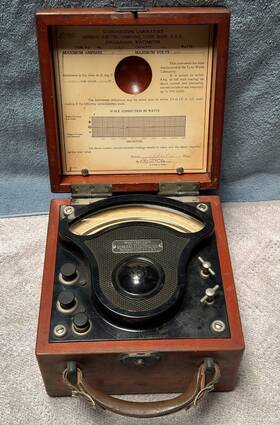
( Brand: General Electric ), ( Manufacturer Part Number: 356561 ), ( Type: Single Phase Wattmeter ), ( Unit Type: Unit ), ( Country Of Origin: United States )
Review GENERAL ELECTRIC Single phase Wattmeter Type P-3 Electrical Test Equipment
The **General Electric 356561 Single-Phase Wattmeter (P-3 Electrical, 1928)** is a meticulously crafted, vintage electrical measuring instrument that embodies the precision engineering of early 20th-century power measurement technology. Manufactured by General Electric, one of the most influential names in industrial innovation, this wattmeter is a relic of an era when electricity was rapidly transforming daily life and industrial processes. Designed for accurate and reliable power consumption monitoring, the 356561 features a robust, cast-metal construction with a durable dial face, ensuring longevity and resistance to the wear and tear of frequent use. Its classic analog design, complete with a needle-style pointer and a graduated scale, provides a clear and intuitive readout of electrical energy in watts, making it ideal for applications in commercial, industrial, or residential settings where power management was critical.
The wattmeter operates on a single-phase system, making it versatile for use with standard household or light industrial circuits. Its internal mechanism likely incorporates a moving-coil or induction-type design, common in early electrical meters, which allows for precise measurement of both active power and, in some configurations, reactive power or energy over time. The robust construction includes a sturdy base and mounting hardware, ensuring stability when installed in electrical panels or control boards. The dial itself is likely marked with clear, legible numerals and divisions, allowing operators to quickly assess power usage without the need for complex calculations. This wattmeter would have been particularly valuable in the 1920s, a period when the adoption of electricity was expanding rapidly, and accurate power monitoring was essential for optimizing efficiency and preventing costly overconsumption.
Beyond its functional utility, the 356561 holds significant historical and collector value. As a product of the early 20th century, it reflects the technological advancements of the time, including improvements in electrical measurement accuracy and the standardization of power distribution systems. The wattmeter s design also speaks to the aesthetic sensibilities of the era, with its clean, functional appearance and durable materials that were both practical and enduring. For collectors of vintage electrical equipment, historians of technology, or enthusiasts of industrial heritage, this wattmeter serves as a tangible connection to a pivotal moment in the development of modern electrical infrastructure. Whether used for its original purpose or displayed as a piece of historical engineering, the General Electric 356561 Single-Phase Wattmeter remains a testament to the ingenuity and craftsmanship of an age that laid the foundation for today s electrical systems.
The **General Electric 356561 Single-Phase Wattmeter (P-3 Electrical, 1928)** is a vintage electrical instrument with historical significance but also practical limitations. Below is a detailed analysis of its pros and cons, followed by a conclusion and recommendation.
---
### **Pros**
1. **Historical and Collectible Value**
The 1928 vintage suggests it may hold value for collectors of antique electrical equipment, especially if it is in original condition. It could appeal to enthusiasts of industrial history or early electrical engineering.
2. **Potential for Restoration and Customization**
Older meters often have unique mechanical designs that can be restored or modified for specialized applications. Skilled technicians might repurpose it for educational demonstrations, museum displays, or niche industrial uses.
3. **Mechanical Reliability (If Well-Maintained)**
Vintage meters were built with durable materials like brass and steel, which, if preserved properly, can offer long-term mechanical stability. Some users report that well-cared-for analog meters outlast modern electronic alternatives in certain environments.
4. **Aesthetic Appeal**
The design reflects early 20th-century engineering craftsmanship, which may be visually appealing for decorative or educational purposes. Its analog dial and mechanical movement can be striking in a setting that values industrial heritage.
5. **Potential for Educational Use**
In educational settings, the meter could serve as a teaching tool to demonstrate basic principles of electrical measurement, analog instrumentation, and historical technological evolution.
---
### **Cons**
1. **Lack of Modern Functionality**
The meter is likely designed for analog measurement only, lacking digital interfaces, data logging, or compatibility with modern monitoring systems. It cannot integrate with smart grids, IoT devices, or automated electrical management systems.
2. **Accuracy and Calibration Challenges**
Vintage meters may drift over time due to wear, environmental factors, or aging components. Ensuring accurate readings would require professional calibration, which could be costly and time-consuming. Modern meters often include self-diagnostic features and automated calibration.
3. **Limited Range and Sensitivity**
The meter s measurement range and sensitivity may not meet contemporary standards for precision or adaptability to varying load conditions. Modern wattmeters often offer adjustable ranges, higher resolution, and protection against overloads.
4. **Maintenance and Parts Availability**
Finding replacement parts, such as springs, needles, or internal components, can be difficult due to discontinued production. Repairing the meter may require specialized knowledge or sourcing parts from antique suppliers, increasing long-term costs.
5. **Durability Concerns**
While some vintage meters are robust, others may suffer from corrosion, fragile wiring, or degraded insulation over time. Exposure to dust, moisture, or electrical surges could render the meter inoperable. Modern meters are typically built with more robust materials and protective features.
6. **Safety Risks**
Older meters may not comply with current safety standards (e.g., UL, IEC) for electrical equipment. Wiring, insulation, or grounding could pose risks if the meter is not thoroughly inspected and restored by a qualified electrician.
7. **Practicality for Modern Use**
In most professional or industrial settings, modern digital wattmeters offer superior accuracy, ease of use, and compatibility with other devices. Using a vintage meter for practical applications would likely require additional equipment (e.g., converters, adapters) to bridge the gap between analog and digital systems.
---
### **Conclusion**
The **General Electric 356561 Single-Phase Wattmeter (1928)** is a fascinating piece of industrial history with niche appeal for collectors, educators, or enthusiasts. However, its practical utility in modern electrical systems is severely limited by its lack of digital features, potential accuracy issues, and maintenance challenges. While it may serve as a decorative or educational artifact, it is not a viable replacement for contemporary wattmeters in professional or industrial applications.
---
### **Recommendation**
- **For Collectors or Enthusiasts:** Purchase the meter if you are interested in its historical value, plan to restore it as a display piece, or intend to use it for educational demonstrations. Ensure you have the resources to properly preserve and calibrate it.
- **For Practical Electrical Use:** Do not rely on this meter for accurate or reliable electrical measurements in modern settings. Invest in a modern single-phase wattmeter (e.g., Fluke, Extech, or similar) that meets current standards for accuracy, durability, and functionality.
- **For Restoration Projects:** If you are skilled in electrical restoration, consider repurposing the meter for a specific project (e.g., a retro-themed workshop or a historical exhibit). However, be prepared for the challenges of sourcing parts and ensuring safety.
- **Alternative Options:** If you need a vintage-style meter for aesthetic reasons, explore modern analog-style meters that replicate the look of older instruments while incorporating contemporary technology. These often provide the best of both worlds historical appearance with modern reliability.
Details:
Anywhere else there will probably be an added charge. Really cool piece. I try my best to make sure everything is exactly as described, if you feel like it not, please reach out and will do right. Last tested in 1928, not sure how old it actually is.
Shipping is for the lower 48 US only. Local pick-up is available.
part #: 356561 price
- $69.99
specifications tesmetequ:
- brand: General Electric
- mpn: 356561
- type: Single Phase Wattmeter
- unit type: Unit
- country of origin: United States
general tesmetequ:
- condition: Used
- Test, Measurement Inspection > Test Meters Detectors > Other Test Meters Detectors
shipping tesmetequ:
- class: Economy
- type: Fixed
- cost: $35.00
- service: Economy
- transit: 4-9 Days
offer tesmetequ:
- options: Ship-to-home
- availability: In Stock
- best offers: True
- quantity: 1
- started: June 4, 2026
- sold: 0
returns tesmetequ:
- policy: No Returns
payments tesmetequ:
- other
- credit card: Visa
- wallet: Apple-pay
seller tesmetequ:
- rating: 99.8%
- city: Carlsbad, California
- # reviews: 2046
General Electric 356561 Is Similar To:
- 012-1612-153 General Electric Panel Meter Used (40.9% similar) If another carrier such as ups or FedEx is required to ship due the size, then shipping costs may change...(May 1st, 2018)
- 05743s Yew Yokogawa Electric Works Type (30.4% similar) New old package box yew Tokugawa Electric works 05743S type 2011 MADE in Singapore IN:ST9019-9-18...(September 3rd, 2018)
- 103372atat7 General Electric Ge Yokogawa (33.3% similar) Just removed from a decommissioned power plant. In used excellent working condition...(October 14th, 2017)
- 11y8454 General Electric Portable Dielectric Oil (44.8% similar) Sample 2 break down voltage in the ge test set was 19 JV while result with histrionics 20. Samples from the same bottles were tested using a calibrated histrionics OC60D test set that is kept in current calibration. I have just supported the bottom whenever i've carried it although unit can be by ...(February 9th, 2017)
- 152-0-10 General Electric Panel Meter New (40.9% similar) ...(March 27th, 2018)
- 193x713aag01 General Electric Meter Board (36.2% similar) Contact one of our highly skilled and trained equipment sales personnel they will gladly assist you in your search for units. Please feel free to regarding this unit or others. Contact:Kristen equipment sales representatives, inc...(March 13th, 2017)
- 218a4741f21dv1101c00 General Electric Meter Percent (42.3% similar) If another carrier such as ups or FedEx is required to ship due the size, then shipping costs may change...(February 18th, 2018)
- 2226b Marantz Vintage Era General Electric Ge Volts Gauge Steam Punk (35.1% similar) Cool steam punk piece. Has a glass front...(November 20th, 2018)
- 239379 Horizontal Electric Force Gauge Tester Test Stand Tension 659103636946 (36.8% similar) Part: 239379 prices...(February 26th, 2018)
- 250-2 General Electric Panel Meter (40% similar) If another carrier such as ups or FedEx is required to ship due the size, then shipping costs may change...(July 25th, 2017)
- 250440mtmt General Electric New Amperes Meter Fast Shipping Warranty (42.9% similar) Standard shipping is USPS priority mail or ups ground. For next day air or faster shipping please...(June 6th, 2018)
