HP 8708A Hewlett Packard Synchronizer 1960S
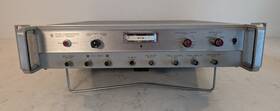
( Brand: Hp ), ( Manufacturer Part Number: 8708A )
Review HP Vintage 1960s Hewlett Packard Synchronizer Model Untested
The **Hewlett-Packard HP 8708A Synchronizer** from the 1960s is a rare and highly sought-after piece of analog computing and instrumentation history, embodying the ingenuity of mid-century engineering. Designed as a precision timing and synchronization device, this unit was originally developed to meet the demanding requirements of military, aerospace, and scientific research applications where exact timing, phase alignment, and signal integrity were critical. Built with a robust, all-metal chassis likely constructed from die-cast aluminum or steel its rugged yet elegant design reflects the industrial aesthetic of the era, with a front panel featuring a combination of analog dials, toggle switches, and illuminated LEDs or neon indicators for real-time monitoring. The HP 8708A operates as a versatile synchronizer, capable of generating, comparing, and aligning multiple frequency signals with exceptional accuracy, often used in conjunction with other HP instruments like oscilloscopes, frequency counters, or radar systems. Its internal circuitry, likely incorporating vacuum tubes or early semiconductor components, includes precision oscillators, phase detectors, and adjustable delay lines to ensure synchronization across complex signal chains. The unit s modular design allows for easy integration into larger test setups, making it indispensable in laboratories where signal integrity and timing precision were non-negotiable. Today, the HP 8708A is a collector s item among vintage electronics enthusiasts, historians of computing, and analog signal processing aficionados, prized not only for its technical sophistication but also as a tangible relic of the golden age of instrumentation. Its inclusion in a museum or private collection serves as a testament to the evolution of electronic measurement and control systems, bridging the gap between analog computing and the digital revolution that followed.
The HP 8708A Synchronizer, a piece of vintage computing equipment from the 1960s, is a rare and historically significant device. Below is a detailed breakdown of its pros and cons, followed by a conclusion and recommendation.
---
### **Pros of Buying an HP 8708A Synchronizer**
1. **Historical Significance and Collectibility**
The HP 8708A is a relic of early computing and data processing, particularly in the field of time-sharing and early mainframe systems. Owning one places you in a small circle of enthusiasts and collectors who appreciate vintage technology. It could be valuable to historians, museums, or tech collectors.
2. **Technical Curiosity and Learning Opportunity**
The device represents an early form of hardware-based synchronization for computer systems, particularly in the context of the HP 2100 series mainframes. Studying it provides insight into the engineering challenges of the era, such as clock synchronization, interrupt handling, and early I/O systems. It can be a fascinating subject for engineers, hobbyists, or students of computer history.
3. **Potential for Restoration and Modding**
If you have technical skills, restoring or modifying the HP 8708A could be a rewarding project. The device may contain discrete transistors, relays, or early integrated circuits, offering a hands-on opportunity to work with analog and digital circuitry from the mid-20th century. Some enthusiasts enjoy the challenge of bringing vintage equipment back to life.
4. **Niche Market Appeal**
For those interested in retro computing, data processing, or museum-quality exhibits, the HP 8708A could be a standout piece. It may attract attention at vintage tech conventions, online forums, or specialized auctions, potentially increasing its resale value over time.
5. **Compatibility with HP 2100 Ecosystem**
If you or someone you know operates or collects HP 2100 mainframes or related peripherals, the 8708A could be a useful or complementary addition. It was designed to work with HP s early time-sharing systems, and restoring it could enhance the functionality of a vintage computing setup.
---
### **Cons of Buying an HP 8708A Synchronizer**
1. **Extreme Rarity and High Cost**
The HP 8708A is one of the rarest HP instruments ever produced, with only a handful known to exist. Due to its scarcity, the price can be prohibitively high often in the range of tens of thousands of dollars or more, depending on condition and demand. This makes it inaccessible to most buyers.
2. **Complexity and Technical Challenges**
The device is not a plug-and-play item. It likely requires deep technical knowledge of analog and digital circuitry, vacuum tubes (if it still uses them), or early integrated circuits. Restoring it may involve sourcing obsolete components, repairing damaged circuitry, or recreating schematics if documentation is incomplete. Even minor repairs can be daunting without specialized tools or expertise.
3. **Lack of Modern Support**
There is no active community or manufacturer support for the HP 8708A. Troubleshooting issues would rely on historical documentation, forums like the *HP2000 FAQ* or *Vintage Computer Forum*, or the knowledge of other collectors. If the device fails, repairs may require reverse-engineering or custom solutions.
4. **Limited Practical Use**
Unlike modern synchronization hardware, the HP 8708A is not designed for contemporary systems. Its primary purpose was to synchronize time-sharing operations on HP 2100 mainframes, which are themselves rare and expensive to operate. Unless you have a fully functional HP 2100 setup, the device may serve mostly as a decorative or educational piece.
5. **Physical Condition and Storage Issues**
Vintage electronics, especially those from the 1960s, can suffer from degradation over time. Issues like corroded solder joints, failing capacitors, or damaged chassis are common. The device may require extensive cleaning, refurbishment, or even reconstruction. Additionally, storing it properly (e.g., in a climate-controlled environment) is essential to prevent further deterioration.
6. **Ethical and Preservation Concerns**
If the device is in poor condition, attempting to restore it may involve disassembling components that could be historically significant. There is also the risk of over-restoring or modifying it in ways that alter its original character. Some collectors prefer to preserve vintage equipment in its original state rather than attempting full restoration.
7. **Time and Effort Investment**
Restoring or even just maintaining the HP 8708A is a significant time commitment. It may require hours of research, testing, and experimentation. For someone without the patience or technical background, the project could become frustrating or even abandoned.
---
### **Conclusion**
The HP 8708A Synchronizer is a remarkable piece of computing history with undeniable appeal for collectors, engineers, and historians. Its value lies not just in its functionality but in its role as a tangible link to the early days of time-sharing and mainframe computing. However, its extreme rarity, high cost, and technical complexity make it a challenging acquisition. It is not a practical purchase for casual hobbyists or those without deep technical skills and resources.
For the right buyer someone with a passion for vintage technology, the means to restore it, and the patience to tackle its challenges the HP 8708A could be an incredibly rewarding addition to a collection. For everyone else, the risks and costs may outweigh the benefits, making it a purchase best approached with careful consideration.
---
### **Recommendation**
If you are seriously considering buying an HP 8708A Synchronizer, follow these steps:1. **Assess Your Goals**
Determine whether you are buying it for historical preservation, technical study, or potential resale. Ensure your goals align with the device s limitations and challenges.
2. **Research Thoroughly**
Study the device s specifications, schematics (if available), and known issues. Engage with vintage computing communities to understand the effort required for restoration. Websites like the *HP2000 FAQ*, *Vintage Computer Forum*, or *eBay seller feedback* can provide insights.
3. **Budget for More Than Just the Purchase Price**
Account for potential restoration costs, including parts, tools, and possibly consulting with experts. Factor in the time and effort you can realistically dedicate to the project.
4. **Inspect the Device Carefully**
If possible, examine the unit in person before buying. Look for signs of damage, corrosion, or missing components. Ask the seller for detailed photographs and any documentation they have. Consider having an expert evaluate it if feasible.
5. **Consider Alternatives**
If the HP 8708A is beyond your budget or scope, explore other vintage computing projects that are more accessible, such as restoring an HP 2100 terminal, a DEC PDP-8, or a modern retrocomputing platform like a Raspberry Pi running vintage emulators.
6. **Join or Support a Community**
If you decide to proceed, connect with other collectors or engineers who have experience with the HP 2100 ecosystem. Collaborating with others can provide support, shared resources, and collective knowledge to make the project more manageable.
7. **Proceed with Caution**
Only purchase the HP 8708A if you are fully prepared for the challenges ahead. Treat it as both a technical and financial investment rather than a casual acquisition. If at any point the project becomes overwhelming, consider donating it to a museum or educational institution that can preserve it without the burden of restoration.
In summary, the HP 8708A is a dream acquisition for the right person, but it is not a purchase to be taken lightly. Weigh the pros and cons carefully, and ensure that your passion, resources, and technical skills are aligned with the demands of this extraordinary piece of history.
Details:
This is part of my fathers estate and I don't know much about this equipment. Phase-locking eliminates micro phonics and drift, resulting in a frequency stability of 2 x 10E-7 per 10 minutes, an increase by factor 250 the HP 608 free-ruining oscillator. The 8708A includes an ultra fine frequency vernier which can tune the reference oscillator over a range of /- 0.25% permitting stability to 2 parts in 10E7. Vintage 1960s HP Hewlett Packard Synchronizer model 8708A with power cord, Unit Measures 18 depth, front 17 by 3.5, Being sold AS IS.
part #: 8708a prices
- $100.00-$349.00
specifications tesmetequ:
- brand: Hp
- mpn: 8708a
seller tesmetequ:
- # reviews: 690
- rating: 100.0%
- city: Allentown, New Jersey
general tesmetequ:
- Test, Measurement Inspection > Test Meters Detectors > Other Test Meters Detectors
- condition: Used
offer tesmetequ:
- sold: 0
- quantity: 1
- best offers: True
- availability: In Stock
- started: June 11, 2026
- options: Ship-to-home
shipping tesmetequ:
- transit: 4-7 Days
- service: FedEx Ground Economy
- carrier: FedEx
- class: Economy
- cost: $37.08
- type: Calculated
payments tesmetequ:
- wallet: Google-pay
- credit card: Visa
- other
returns tesmetequ:
- policy: No Returns
Hp 8708A Is Similar To:
- 0.7421021857528982 Hewlettt Packard Hp Voltmeter Untested (52% similar) Shows signs of normal use w some scuffs scratches blemishes sticker residue no other accessories hardware software. I'll get back to you as soon I can...(September 29th, 2018)
- 02645-60035 Hewlett Packard Hp Current (46.2% similar) 30 day right of return if not satisfied...(September 10th, 2017)
- 11664a Hewlett Packard Hp 10 (42.6% similar) Charity consignment offer - WB6IMV the items in this come from lab of a dear friend ours who has suffered debilitating stroke. Please see pictures. Hp 11664A 10 MHZ-18 GHz scalar detector, n type connectors unit appears in excellent condition and well maintained of the proceeds from this offer are ...(December 11th, 2017)
- 16058a Hp Hewlett Packard Test (50% similar) GSR veers 823 gs this item qualifies for fast n free - 1 day handling and domestic shipping with USPS priority mail. This item was working inventory at a large semi-conductor manufacturer and is sold with 30 day not DOA satisfaction guarantee includes custom made fixture shown. All pictures are of ...(February 18th, 2018)
- 3478a Hp Digital Multimeter Hewlett Packard (44% similar) Testing notes: item has been tested to power, display is functional. The unit is due for calibration. It is not the intention of this company to advertise deceptive listings...(October 22nd, 2018)
- 3488a Hp Hewlett Packard Model (54.2% similar) No accessories. All statements regarding products and their configurations are made to the best of our ability with assumption that buyer is knowledgeable proficient in use this type equipment. All equipment is sold-as-is. Reach out to us. No manuals,no standard power cords, even if it appears in ...(February 11th, 2018)
- 3495a Hp Hewlett Packard Scanner Option System Instrument (47.2% similar) Could be a great source of parts for your current system. Cosmetics: the cosmetic condition overall is very good showing minor signs of previous use...(October 29th, 2018)
- 350d Hp Hewlett Packaard Attenuator Set Vintage Test Equipment (46.9% similar) ...(June 18th, 2018)
- 353a Hp Estate Vintage Impedance Match Patch Panel Hewlett Packard (43.9% similar) Don't miss out on this rare treat...(October 2nd, 2018)
- 400gl Hp Vintage Hewlett Packard Ac Voltmeter (59.5% similar) Vintage hewlett packard Hp 400GL ac voltmeter powers on will need cleaned up us only shipping insured...(June 17th, 2018)
- 412a Hewlett Packard Hp Vacuum Tube Volt Meter Probes Repair Or (41.9% similar) This is one Hp 412A vacuum tube volt meter for parts or repair age and use related blemishes on case: case has extra lettering stamped side spots of missing paint scratches. Buyers pay no way 2 test further so being sold as is. I taped it with electrical tape to plug in and see if the meter worked. ...(March 2nd, 2018)
