PERKINELMER N2920030 Flexar Refractive Index Lc Detector Power 100-240VAC
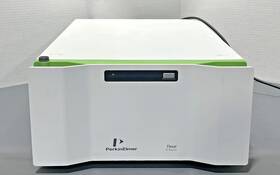
( Brand: Perkinelmer ), ( Manufacturer Part Number: N2920030 ), ( Type: Refractive Index Lc Detector ), ( Unit Type: Unit ), ( Country Of Origin: China )
Review PERKINELMER Flexar Refractive Index Lc Detector 100-240vac Power Tested
The **PerkinElmer N2920030 Flexar Refractive Index (RI) Detector** is a high-performance analytical instrument designed to deliver unparalleled precision and reliability in liquid chromatography applications, particularly for the detection of non-absorbing compounds that lack chromophores or fluorophores. Engineered as a core component of the Flexar LC System, this detector excels in separating and quantifying a wide range of analytes, including sugars, polymers, proteins, and other non-UV-absorbing substances, by measuring the refractive index differences between the mobile phase and the eluting solute. The detector operates on the principle of differential refractometry, where a sample beam and a reference beam are split through a precision optical system, allowing for real-time monitoring of refractive index variations with exceptional sensitivity and stability. Built with PerkinElmer s signature attention to engineering excellence, the N2920030 features a robust, compact design optimized for seamless integration into both research and industrial chromatography workflows, ensuring minimal dead volume and maximum efficiency in detection.
Powered by a versatile **100 240VAC** input, this detector is engineered for global compatibility, accommodating a broad range of electrical environments without compromising performance. Its advanced optical components, including a high-stability mercury lamp and a temperature-controlled flow cell, ensure consistent and repeatable measurements across varying experimental conditions. The flow cell itself is designed with a low-volume, high-sensitivity configuration, reducing dispersion and enhancing peak resolution while maintaining sensitivity down to the sub-microgram level. Additionally, the detector incorporates intelligent temperature control mechanisms to mitigate thermal drift, a critical factor in achieving long-term stability and accuracy in refractive index measurements. Whether deployed in pharmaceutical quality control, bioprocess monitoring, or academic research, the N2920030 delivers a robust solution for applications where traditional UV or fluorescence detection fall short, offering researchers and analysts a dependable tool for comprehensive chromatographic analysis.
**Pros and Cons of buying a PerkinElmer N2920030 Flexar Refractive Index (RI) Liquid Chromatography Detector (100 240VAC Power)**
### **Pros**
1. **High Sensitivity and Precision**
The Flexar RI detector is known for its excellent sensitivity, making it suitable for detecting low-concentration analytes in complex samples. It provides accurate refractive index measurements, which are critical for applications like polymer analysis, carbohydrate separation, and non-UV-absorbing compounds.
2. **Compatibility with a Wide Range of Applications**
RI detectors are universal, meaning they can detect any compound that alters the refractive index of the mobile phase, regardless of its UV absorbance. This makes them ideal for:
- **Polymer characterization** (e.g., molecular weight distribution, copolymer composition)
- **Carbohydrate and sugar analysis**
- **Biopharmaceutical and protein analysis** (when combined with other detectors)
- **Food and beverage analysis** (e.g., sweeteners, starches)
- **Petroleum and petrochemical analysis**
3. **Stability and Reliability**
PerkinElmer is a reputable manufacturer with a long history in analytical instrumentation. The Flexar series is designed for robustness, offering stable baseline performance over extended periods, which is essential for high-throughput or continuous operation.
4. **Integration with PerkinElmer s Ecosystem**
The detector is fully compatible with PerkinElmer s **Flexar LC system**, including pumps, autosamplers, and data acquisition software (e.g., **TotalChrom** or **OpenLab**). This seamless integration simplifies method development, data analysis, and system maintenance.
5. **Low Maintenance Requirements**
RI detectors generally have fewer consumables than other detectors (e.g., UV or MS), reducing operational costs. The flow cell is typically durable, and calibration is less frequent compared to mass spectrometers or fluorescence detectors.
6. **Versatility in Mobile Phase Compatibility**
Unlike UV detectors, which are limited by solvent absorption, RI detectors work across a broad range of mobile phases, including aqueous, organic, and mixed solvents. This flexibility is advantageous for gradient elution and complex sample matrices.
7. **Cost-Effective for Specific Applications**
While RI detectors may not be as sensitive as mass spectrometers for some applications, they can be more economical for tasks where universal detection is sufficient. They eliminate the need for derivatization or expensive consumables (e.g., MS gases).
8. **Support and Warranty**
PerkinElmer offers comprehensive technical support, training, and warranty coverage, which can be valuable for laboratories with limited LC expertise.
---
### **Cons**
1. **Limited to Refractive Index Changes**
The detector cannot distinguish between different compounds based on chemical structure it only measures changes in refractive index. This means it lacks the specificity of detectors like **UV, fluorescence, or mass spectrometry**, which can identify compounds by their unique spectral properties.
2. **Sensitivity to Temperature Fluctuations**
Refractive index measurements are highly dependent on temperature. Even minor temperature variations in the flow cell or mobile phase can introduce baseline drift or inaccurate results. This requires precise temperature control (e.g., thermostatted columns and detectors), adding complexity to the setup.
3. **Baseline Drift Over Time**
While generally stable, RI detectors can experience baseline drift due to:- **Mobile phase composition changes** (e.g., evaporation of volatile solvents)
- **Flow cell fouling** (e.g., from particulate matter or high-concentration samples)
- **Temperature instability**
This may necessitate frequent recalibration or cleaning.
4. **Higher Initial Cost Compared to Basic Detectors**
While cheaper than mass spectrometers or high-end UV detectors, a **Flexar RI detector** is still a significant investment, especially when paired with a full LC system. Laboratories with limited budgets may opt for simpler, lower-cost alternatives (e.g., basic UV detectors) if RI specificity is not critical.
5. **Flow Cell Sensitivity to Contaminants**
The flow cell must be kept clean to avoid baseline noise or signal suppression. Highly viscous or particulate samples can clog or damage the cell, requiring frequent maintenance.
6. **Slower Response Time Compared to Some Detectors**
RI detectors typically have a slower response time than UV or fluorescence detectors, which can affect peak resolution in fast-gradient separations or high-speed LC methods.
7. **Limited Use in Gradient Elution Without Optimization**
While RI detectors can handle gradient elution, the refractive index of the mobile phase changes with composition, leading to baseline shifts. This requires careful method optimization to maintain sensitivity and accuracy.
8. **Dependence on PerkinElmer s Software and Hardware**
Users are locked into PerkinElmer s data acquisition and analysis software, which may not be as flexible or user-friendly as third-party alternatives (e.g., **Empower, Chromeleon, or open-source options**). This can be a drawback for laboratories with diverse instrumentation needs.
---
### **Ending Conclusion**
The **PerkinElmer N2920030 Flexar Refractive Index Detector** is a **high-quality, reliable tool** for laboratories requiring **universal detection** of non-UV-absorbing compounds, particularly in fields like **polymer science, carbohydrate analysis, and biopharmaceuticals**. Its **sensitivity, stability, and compatibility with PerkinElmer s LC ecosystem** make it a strong choice for applications where refractive index detection is essential.
However, its **lack of chemical specificity, sensitivity to temperature fluctuations, and higher cost** compared to simpler detectors may limit its suitability for **high-throughput screening, complex mixture analysis (without additional detectors), or applications where mass spectrometry or advanced UV techniques are preferred**. Laboratories should carefully assess their **specific analytical needs** before purchasing.
### **Recommendation**
**Buy the PerkinElmer Flexar RI Detector if:**- You require **universal detection** for compounds that do not absorb UV/Vis light.
- Your work involves **polymer characterization, carbohydrate analysis, or biopharmaceuticals** where RI data is critical.
- You are already using **PerkinElmer s LC system** and benefit from seamless integration.
- Your budget allows for a **mid-to-high-end detector** with long-term reliability.
**Avoid or Consider Alternatives if:**- You need **chemical specificity** (e.g., for complex mixtures), in which case **mass spectrometry (MS) or advanced UV detectors** would be better.
- Your applications are **highly sensitive to temperature drift**, and you lack precise environmental control.
- You are working with **fast-gradient separations** where slower response times could impact resolution.
- Your budget is constrained, and a **lower-cost RI detector** (e.g., from **Shimadzu, Agilent, or third-party suppliers**) offers comparable performance at a reduced price.
**Alternative Considerations:**- For **budget-friendly RI detection**, explore **Shimadzu s RID-20A** or **Agilent s 1260 RI Detector**.
- If **chemical specificity is needed**, pair an RI detector with a **UV, fluorescence, or MS detector** in a **hyphenated system**.
- For **high-throughput or automated analysis**, ensure your system includes **robust temperature control** and **maintenance protocols** to mitigate baseline drift.
Details:
Power Tested with included power cord. PerkinElmer Flexar Refractive Index LC Detector 100-240VAC Power Tested: Item Details: , model Flexar RI Detector, Part NumberN2920030, Condition Device has scuffs and scratches from normal use. Includes Power cord. Red check mark when powered on.
part #: n2920030 price
- $999.99
specifications tesmetequ:
- brand: Perkinelmer
- mpn: N2920030
- type: Refractive Index Lc Detector
- unit type: Unit
- country of origin: China
general tesmetequ:
- Test, Measurement Inspection > Test Meters Detectors > Other Test Meters Detectors
- condition: For parts or not working
shipping tesmetequ:
- service: FedEx Ground / FedEx Home Delivery, FedEx 2Day
- transit: 4-7 Days
- type: Fixed
- class: Standard, Expedited
- cost: $45.00
- carrier: FedEx
seller tesmetequ:
- city: Salisbury, North Carolina
- rating: 99.7%
- # reviews: 28884
offer tesmetequ:
- best offers: True
- options: Ship-to-home
- started: May 8, 2026
- availability: In Stock
- sold: 0
- quantity: 1
payments tesmetequ:
- credit card: Visa
- other
- wallet: Google-pay
returns tesmetequ:
- policy: No Returns
