PRINCETON INSTRUMENTS OMA1024-17-S-133B-US-D Oma Ingaas Omav Detector
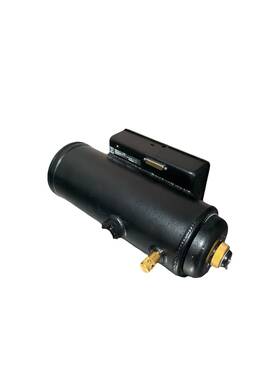
( Brand: Princeton Instruments ), ( Manufacturer Part Number: OMA1024-17-S-133B-US-D ), ( Part Type: Detector )
Review PRINCETON INSTRUMENTS Oma Ingaas Detector System Omav
The **Princeton OMA1024-17-S-133B-US-D OMA InGaAs Detector** is a high-performance, back-illuminated, near-infrared (NIR) imaging array designed for advanced scientific, industrial, and research applications requiring exceptional sensitivity, speed, and spectral range. Engineered by Princeton Instruments, a leader in optical detection technology, this detector combines cutting-edge InGaAs (Indium Gallium Arsenide) photodiode technology with a 1024-pixel linear array configuration, delivering unparalleled performance in the wavelength range of approximately **900 nm to 1700 nm**, making it ideal for applications such as spectroscopy, hyperspectral imaging, process monitoring, and biomedical research. The **17 m pixel pitch** ensures a balance between spatial resolution and light collection efficiency, while the **1024-element array** provides a compact yet highly versatile detection platform for capturing high-resolution spectral data with minimal noise. This detector is optimized for high-speed data acquisition, supported by Princeton s proprietary **OMA (Optical Multichannel Analyzer)** technology, which enables real-time spectral imaging at rates exceeding **100 kHz per pixel**, depending on the readout mode and cooling configuration. The **TE-cooled (-30 C) design** significantly reduces dark current and thermal noise, enhancing signal-to-noise ratio (SNR) for low-light applications, while the **back-illuminated architecture** maximizes quantum efficiency, ensuring optimal sensitivity across the entire NIR spectrum. The **USB 3.0 interface (via the OMA-6 USB adapter)** facilitates seamless integration with modern computing systems, allowing for high-bandwidth data transfer and compatibility with industry-standard software like **WinSpec, LabVIEW, or MATLAB**. Additionally, the detector s **low power consumption and rugged construction** make it suitable for both laboratory and field-deployed applications, where reliability and durability are critical. Whether used in **chemical analysis, material science, environmental monitoring, or optical communications testing**, the OMA1024-17-S-133B-US-D delivers a robust, high-performance solution for demanding NIR detection requirements, setting a new standard for precision and versatility in optical measurement systems.
### **Pros and Cons of buying a Princeton OMA1024-17-S-133B-US-D (OMA InGaAs Detector)**
#### **Pros**
1. **High Sensitivity and Broad Spectral Range**
The OMA1024-17-S-133B is an InGaAs (Indium Gallium Arsenide) detector optimized for near-infrared (NIR) and short-wave infrared (SWIR) applications, covering wavelengths from approximately **900 nm to 1700 nm**. This makes it ideal for spectroscopy, fluorescence imaging, and other NIR-based analytical techniques where silicon detectors fail.
2. **High Spatial Resolution (1024 Pixels)**
With **1024 active pixels**, the detector provides excellent spatial resolution, making it suitable for applications requiring detailed spectral or spatial imaging, such as Raman spectroscopy, hyperspectral imaging, or fluorescence mapping.
3. **Fast Response Time**
The detector features a **low noise, high-speed readout**, allowing for real-time or near-real-time data acquisition, which is crucial in dynamic experiments or high-speed imaging applications.
4. **Low Dark Current and High Quantum Efficiency**
InGaAs detectors generally exhibit **low dark current** compared to silicon-based detectors, reducing thermal noise. The high quantum efficiency in the NIR region ensures better signal detection, improving sensitivity in weak-light conditions.
5. **Compatibility with Princeton Instruments Software and Hardware**
As part of Princeton Instruments OMA (Optical Multichannel Analyzer) family, this detector integrates seamlessly with their **WinSpec, Acton Spectrometers, and other imaging systems**. This ensures ease of use with their proprietary software for data acquisition and analysis.
6. **Durability and Reliability**
Princeton Instruments is a well-established manufacturer with a reputation for **high-quality, durable scientific instrumentation**. The detector is built for laboratory use, offering stability in controlled environments.
7. **Versatile Applications**
Beyond spectroscopy, this detector can be used in:- **Fluorescence lifetime imaging (FLIM)**
- **Photoluminescence studies**
- **Biomedical imaging (e.g., tissue analysis)**
- **Chemical sensing (e.g., gas detection via NIR absorption)**
---
#### **Cons**
1. **High Cost**
The OMA1024-17-S-133B is an **expensive piece of equipment**, typically costing **$50,000 $100,000 ** depending on configuration and accessories. This makes it a significant investment, especially for smaller labs or individual researchers.
2. **Limited Wavelength Range**
While the **900 1700 nm** range is useful, it does not cover **mid-IR (2 5 m) or far-IR regions**, limiting its applicability in certain fields like thermal imaging or certain vibrational spectroscopy techniques.
3. **Requires Additional Hardware for Full Functionality**
To operate effectively, the detector needs:- A **Princeton Instruments spectrometer** (e.g., Acton SP2300i) for dispersion.
- A **cooling system** (often liquid nitrogen or Peltier cooling) to minimize thermal noise.
- A **computer with WinSpec or similar software** for data acquisition.
This adds to the **total system cost and complexity**.
4. **Maintenance and Cooling Requirements**
- **Liquid nitrogen cooling** (if used) requires regular refills and proper handling to prevent detector damage.
- **Peltier cooling** (if available) may not be as effective for long-term stability in high-temperature environments.
- **Detector degradation over time** is possible due to exposure to high-intensity light or improper handling.
5. **Steep Learning Curve**
- Operating an OMA system requires **training in spectroscopy principles, data analysis, and software calibration**.
- Misconfiguration can lead to **poor signal quality or equipment damage**.
6. **Size and Portability Limitations**
The detector is **bulky and not easily portable**, making it unsuitable for fieldwork or mobile applications. It is best suited for **fixed laboratory setups**.
7. **Competition from Alternative Technologies**
- **Silicon-based CCD/CMOS detectors** are cheaper but limited to ** 1100 nm**.
- **Mercury Cadmium Telluride (MCT) detectors** cover **1 5 m** but are more expensive and require cryogenic cooling.
- **Superconducting Nanowire Single-Photon Detectors (SNSPDs)** offer single-photon sensitivity but are **extremely expensive** and niche.
---
### **Conclusion**
The **Princeton OMA1024-17-S-133B** is a **high-performance InGaAs detector** ideal for **NIR spectroscopy, fluorescence imaging, and related applications** where sensitivity and spatial resolution are critical. Its **superior spectral range, low noise, and integration with Princeton s ecosystem** make it a **top-tier choice for advanced research labs** with the budget and infrastructure to support it.
However, the **high cost, maintenance requirements, and need for complementary hardware** make it **impractical for small labs, startups, or applications outside its wavelength range**. If your work **primarily involves NIR (900 1700 nm)** and you have the resources for proper cooling and software, this detector is an **excellent investment**. Otherwise, **alternatives like silicon-based detectors or MCT detectors** may be more cost-effective for different applications.
---
### **Recommendation**
**Buy the OMA1024-17-S-133B if:**You require **NIR/SWIR spectroscopy (900 1700 nm)** with **high resolution (1024 pixels)**.
Your lab has **Princeton Instruments spectrometers and cooling systems** (or is willing to invest in them).
You need **low-noise, high-speed data acquisition** for fluorescence, Raman, or hyperspectral imaging.
Your budget allows for a **high-end scientific detector** (likely **$50K **).
**Consider alternatives if:**Your application **does not require NIR beyond 1700 nm** (e.g., visible or mid-IR work).
You **lack the budget or infrastructure** for cooling and software integration.
You need **portability or a lower-cost solution** (e.g., silicon CCDs for
Your work is **not research-intensive** (e.g., industrial quality control where cheaper detectors suffice).
**Final Verdict:**For **cutting-edge NIR spectroscopy and imaging research**, this detector is **one of the best available**. However, **carefully evaluate your needs, budget, and long-term maintenance** before purchasing. If possible, **consult with Princeton Instruments sales team or a spectroscopy expert** to ensure it aligns with your specific experimental requirements.
Details:
Shipped with Standard Shipping. Princeton Instruments OMA V:InGaAs Detector System OMA1024-17-S-133B-US-D OMAV. Condition is Used.
part #: oma102417s133bus price
- $739.99
specifications tesmetequ:
- brand: Princeton Instruments
- mpn: Oma1024-17-s-133b-us-d
- part type: Detector
payments tesmetequ:
- credit card: Mastercard
- other
- wallet: Paypal
offer tesmetequ:
- started: May 7, 2026
- quantity: 1
- options: Ship-to-home
- best offers: True
- availability: In Stock
- sold: 0
shipping tesmetequ:
- type: Fixed
- cost: $0.00
- class: Standard
- transit: 4-9 Days
- service: Standard
returns tesmetequ:
- policy: No Returns
seller tesmetequ:
- # reviews: 28904
- rating: 100.0%
- city: New Smyrna Beach, Florida
general tesmetequ:
- Test, Measurement Inspection > Test Meters Detectors > Other Test Meters Detectors
- condition: Used
Princeton Instruments OMA1024-17-S-133B-US Is Similar To:
- 1471a Eg Princeton Applied Research Detector Interface (40.9% similar) Comes as shown. Power cord is not included. No means to test further. Has some cosmetic wear. Acquired from a reliable source. No manuals,no standard power cords, even if it appears in the photo, accessories, software etc are included unless pictured and noted...(January 16th, 2019)
- Princeton Lightwave 23323 Single Photon Detector (42.9% similar) This is a working Princeton light wave PGA-600 single photon detector...(September 19th, 2023)
- Roper Scientific Princeton Instruments 7372-0001 Oma V Ingaas System Detector Free Shipping (58.5% similar) most of our photos are the actual item you purchasing. Note: this item is untested and being sold as-is. Roper scientific 7372-0001 Princeton oma v:ingaas system detector, focal plane array...(February 22nd, 2025)
- Princeton Instruments 7531-001 Oma V Ingaas Detector System Ln ingaas-320x256 2d (70.9% similar) LN/INGAAS-320X256 2d 5MHZ cynics...(May 7th, 2026)
