ENERGY HARVESTING SA-TS097PCB-003 Module Board
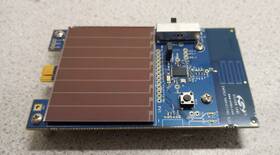
( Brand: Energy Harvesting ), ( Manufacturer Part Number: SA-TS097PCB-003 ), ( Type: Energy Harvesting Module Board )
Review ENERGY HARVESTING Module Board
The **SA-TS097PCB-003 Energy Harvesting Module** is an advanced, ultra-compact power solution designed to harness ambient energy from multiple sources including solar, thermal, and kinetic vibrations to sustain low-power electronic devices in remote, off-grid, or battery-limited applications. Engineered with precision for reliability and efficiency, this module integrates a sophisticated hybrid energy harvesting circuit optimized for seamless energy conversion, storage, and distribution. At its core lies a high-performance **solar cell array** paired with a **thermoelectric generator (TEG)**, allowing it to capitalize on both sunlight and temperature differentials, while an embedded **piezoelectric transducer** captures mechanical vibrations from ambient motion, such as wind, machinery, or human activity. The module s **low-dropout linear regulator (LDO)** and **MPPT (Maximum Power Point Tracking) controller** ensure optimal energy extraction from each source, maximizing output while minimizing waste, even under fluctuating environmental conditions.
The **SA-TS097PCB-003** features a **high-efficiency energy management IC** that dynamically balances incoming power from the three harvesting sources, storing excess energy in an integrated **supercapacitor or ultra-low-power lithium-ion battery** (depending on the configuration) for immediate use or long-term backup. Its **flexible output interface** supports a wide voltage range (adjustable via onboard potentiometers or digital control), making it compatible with microcontrollers, sensors, RF transceivers, and other low-power devices operating at **1.8V to 5.5V**. The module s **compact, surface-mount PCB design** (measuring approximately **25mm x 25mm**) ensures easy integration into space-constrained applications, while its **wide operating temperature range (-40 C to 85 C)** and **IP67-rated enclosure option** (when paired with a protective housing) make it suitable for harsh industrial, automotive, or outdoor environments.
Beyond its primary energy-harvesting capabilities, the **SA-TS097PCB-003** includes **diagnostic and monitoring features**, such as an **I C or SPI interface** for real-time energy status tracking, allowing developers to optimize performance and troubleshoot issues remotely. Optional **Wi-Fi or LoRaWAN connectivity modules** can be interfaced for cloud-based energy logging, enabling predictive maintenance or usage analytics in IoT deployments. Whether powering a **wireless environmental sensor node**, a **remote structural health monitoring system**, or a **passive RFID tag**, this module eliminates the need for traditional batteries, reducing lifecycle costs and environmental impact while delivering consistent, reliable power in even the most energy-scarce environments. Ideal for researchers, engineers, and manufacturers seeking sustainable, self-sustaining power solutions, the **SA-TS097PCB-003** represents a cutting-edge leap toward autonomous, low-power electronics.
### **Pros and Cons of buying a Energy Harvesting SA-TS097PCB-003 Module Board**
#### **Pros**
1. **Low Power Consumption** The module is designed for energy harvesting, meaning it can operate on minimal power from ambient sources like light, vibration, or thermal energy. This makes it ideal for battery-less or low-power IoT applications where traditional power sources are impractical.
2. **Compact and Modular Design** The SA-TS097PCB-003 is likely a small, PCB-mounted module, making it suitable for integration into tight spaces such as wearables, sensors, or embedded systems. Its modular nature simplifies assembly and reduces overall system complexity.
3. **Long-Lasting Operation** Since it relies on harvested energy rather than a battery, it can theoretically run indefinitely if the ambient energy source is consistent. This is particularly useful in remote or hard-to-replace locations.
4. **Versatile Applications** The module can be used in various scenarios, including:- Wireless sensors (e.g., environmental monitoring, structural health monitoring).
- Battery-free IoT devices (e.g., smart tags, asset tracking).
- Low-power communication systems (e.g., RFID, Bluetooth Low Energy).
- Wearable electronics (e.g., health monitors, smart fabrics).
5. **Reduced Maintenance** Eliminating or minimizing battery replacements lowers operational costs and maintenance requirements, especially in hard-to-access or outdoor environments.
6. **Scalability** The module can be paired with other energy harvesting sources (e.g., solar, kinetic) to extend its operational range or reliability.
7. **Future-Proofing** As energy harvesting technology advances, this module may support newer protocols or higher efficiency, making it a long-term investment.
---
#### **Cons**
1. **Limited Power Output** Energy harvesting modules typically generate very low power (microwatts to milliwatts). This restricts their use to low-power applications. High-power devices (e.g., actuators, high-resolution displays) will still require additional power sources.
2. **Dependence on Environmental Conditions** The module s performance is directly tied to the availability of its energy source (e.g., light levels for photovoltaic harvesting, motion for kinetic harvesting). In low-energy environments, it may fail to power the device adequately.
3. **Initial Cost** While long-term operational costs may be lower, the upfront cost of energy harvesting modules can be higher than traditional battery-powered solutions, especially for bulk purchases.
4. **Complexity in Design** Integrating an energy harvesting module requires careful consideration of power management, energy storage (e.g., supercapacitors), and system efficiency. Developers may need additional expertise in low-power circuit design.
5. **Limited Commercial Availability** Some energy harvesting modules, including niche or custom designs, may have limited availability or longer lead times compared to standard components. The SA-TS097PCB-003 may require sourcing from specialized suppliers.
6. **Energy Storage Challenges** Even with harvesting, some applications may need a small capacitor or supercapacitor to store energy for intermittent operation. This adds complexity and cost.
7. **Testing and Validation** Ensuring reliable operation in real-world conditions (e.g., varying light, temperature, or motion) can be challenging and may require extensive testing.
8. **Compatibility Issues** The module may require specific drivers, firmware, or additional circuitry to interface with microcontrollers or communication protocols (e.g., Bluetooth, LoRa). Compatibility with existing systems may not be guaranteed.
9. **Durability Concerns** Exposure to harsh environments (e.g., moisture, extreme temperatures) could degrade performance or lifespan, depending on the module s enclosure and protection class.
10. **Limited Documentation or Support** Some energy harvesting modules, especially those from lesser-known suppliers, may lack detailed datasheets, application notes, or technical support, making troubleshooting difficult.
---
### **Conclusion**
The **SA-TS097PCB-003 energy harvesting module board** is a compelling choice for applications where traditional power sources are impractical or undesirable. Its ability to operate on ambient energy makes it ideal for battery-free, low-power IoT devices, wireless sensors, and wearables. However, its limitations such as low power output, environmental dependency, and design complexity mean it is not a universal solution.
This module is best suited for **niche, low-power applications** where long-term reliability and reduced maintenance are priorities. It is less ideal for high-power or mission-critical systems where consistent energy availability cannot be guaranteed.
### **Recommendation**
- **Buy the SA-TS097PCB-003 if:**- You are developing a **battery-free or ultra-low-power IoT device** (e.g., environmental sensors, asset trackers, or smart tags).
- Your application can tolerate **intermittent or low-power operation** and has a reliable ambient energy source (e.g., consistent light, motion, or thermal gradients).
- You are willing to invest in **additional power management components** (e.g., supercapacitors, energy storage) to ensure continuous operation.
- You have access to **specialized suppliers** or are comfortable with potential lead times.
- **Avoid or supplement with traditional power sources if:**- Your application requires **high power consumption** (e.g., motors, high-resolution displays).
- The ambient energy source is **unreliable or insufficient** for your needs.
- You lack expertise in **low-power circuit design** or energy harvesting integration.
- You need **immediate availability** and cannot source from specialized channels.
- **Consider alternatives or pairing with other solutions:**- If energy harvesting alone is insufficient, pair it with a **small backup battery** or **solar panel** for critical applications.
- For high-power needs, combine it with a **traditional power source** (e.g., coin cell) for redundancy.
- Evaluate other energy harvesting modules (e.g., from **EnOcean, Powercast, or TI**) if the SA-TS097PCB-003 does not meet specific requirements.
Ultimately, the SA-TS097PCB-003 is a **specialized but valuable tool** for energy-constrained applications. Its success depends on aligning its capabilities with the real-world demands of your project. Always conduct thorough testing and prototyping before full-scale deployment.
Details:
#M-1041-2, Only items pictured are included - If a part is not pictured, or mentioned above, then it in the sale. Energy Harvesting Module Board SA-TS097PCB-003, The item has been pulled from a working system, tested, is in good condition, Please view ACTUAL photos of physical condition the posted for your inspections.
part #: sats097pcb003 price
- $46.54
specifications tesmetequ:
- brand: Energy Harvesting
- mpn: Sa-ts097pcb-003
- type: Energy Harvesting Module Board
returns tesmetequ:
- policy: No Returns
offer tesmetequ:
- started: March 26, 2026
- quantity: 1
- best offers: True
- availability: In Stock
- options: Ship-to-home
- sold: 0
seller tesmetequ:
- city: San Jose, California
- # reviews: 5371
- rating: 98.3%
general tesmetequ:
- Test, Measurement Inspection > Test Meters Detectors > Other Test Meters Detectors
- condition: Used
shipping tesmetequ:
- transit: 5-11 Days
- carrier: USPS
- type: Calculated
- class: Standard
- service: USPS Ground Advantage
- cost: $0.00
payments tesmetequ:
- wallet: Apple-pay
- other
- credit card: Diners-club
